ICA Mobile Communication Division
Scholar in the Spotlight
May 2026
Gaëlle Vanhoffelen
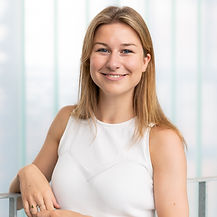
"Academia can sometimes make challenges feel bigger than they are, but sharing and discussing them rather than sitting with them alone usually helps put things in perspective."
What are you currently working on?
I recently returned from a wonderful research stay at the Annenberg School of Communication at UPenn, where I worked with Prof. David Lydon-Staley on the short-term effects of adolescents’ differently motivated online self-presentations on their daily well-being. Since then, I’ve been wrapping up the final chapters of my PhD, which focuses on how adolescents’ online self-presentation relates to their well-being and identity development. In particular, I examine how various self-presentation facets such as authenticity, positivity, and underlying motivations are linked to outcomes like self-esteem, narcissism, and identity distress. Alongside this, I’m also working on projects on online social comparison and adolescents’ interactions with AI chatbots.
Can you share a project that changed the way you think or work?
At the very start of my PhD, I had the opportunity to work within the MIMIc project (an ERC project led by my supervisor, Prof. Laura Vandenbosch) with three other PhD students from different disciplines (sociology, psychology, social work, communication sciences) and countries. What could have made collaboration difficult actually worked in our favor: we approached the same problem from different angles, but with a shared focus on understanding the complex effects of adolescents’ social media use. That experience shifted how I see academic research: from something largely individual to something inherently collaborative. It also made the process really fun, especially working with colleagues like them.
Which piece of work feels closest to your heart, and why?
In many ways, each study is close to my heart because it reflects a different stage of my PhD journey with different collaborations, different methods and new exciting literature to explore. That said, our study on adolescents’ use of BeReal stands out as particularly meaningful to me. It was my first publication, which is I think for many people a quite formative moment. In this study, we examined how adolescents use BeReal to present themselves more authentically, and how both sharing and viewing these authentic self-presentations relate to their self-esteem. Within a week after publication, I received an email from a father whose teenage son had been asked to find scientific evidence on the benefits of BeReal before being allowed to create an account. That moment made me realize how directly our research can reach and influence everyday life and how much people are looking for evidence-based guidance on adolescents’ social media use.
What's a question you keep returning to?
A question I keep coming back to is one that is also frequently asked in public debates: is social media good or bad? Should it be restricted or even banned? What should the ideal minimum age be? What makes these questions so challenging is that they cannot be answered in simple and definite terms. The evidence is nuanced and often even contradictory, yet at the same time there is a strong demand from policymakers, parents, educators, health professionals, and adolescents themselves for clear, actionable guidance; resulting in a tension between scientific complexity and the need for practical decision-making.
It also raises a second, equally important question to my opinion: how can we translate complex and evolving research findings into guidance that is genuinely usable in real-world contexts? Especially given how quickly technology evolves: the digital media landscape often outpaces the scientific research process, leaving both research and policy to chase a moving target. Hence, understanding how to generate timely, rigorous evidence in such a fast-changing digital environment and how to translate that evidence into meaningful support for adolescents and those around them is a question that continues to guide and challenge my work.
If you had a tagline or motto, what would it be?
It might sound a bit optimistic or slightly delusional, but I like to think that everything, even the worst events, somehow comes with at least a tiny positive side. Especially in academia, where things don’t always go as planned (e.g., rejections, setbacks, uncertainties), this mindset helps me to believe that even in these situations there’s something to take from it and will result in something useful or meaningful, which makes it easier to move on.
If time, money, and logistics weren't a concern, what dream project would you dive into?
I would design a large-scale, longitudinal cohort study that follows a diverse, intercultural group of children from all over the world, from birth into adulthood, ideally until key aspects of brain development are fully matured. The goal would be to capture how digital media shapes their mental and physical well-being, as well as their brain and identity development. I would draw upon detailed behavioral log data on their media use, combined with dyadic data on parents’ and peers’ media habits, and complemented by frequent assessments of psychological and physical well-being; ranging from experience sampling and interviews to fMRI scans and collaborations with psychologists and physiotherapists. In other words, a very intensive longitudinal project that would require a small army of researchers, a generous budget, and me suddenly becoming fluent in methods I currently only admire from a distance. ;)
What's one thing you wish someone had told you when you were starting out as a scholar?
I’ve been very lucky to be surrounded by many supportive colleagues who gave me very helpful advices from the start on. One piece of advice from my supervisor, Prof. Laura Vandenbosch, has stayed with me since our first meeting: there is a solution to everything and problems are rarely as unsolvable as they can feel in your own head. Academia can sometimes make challenges feel bigger than they are, but sharing and discussing them rather than sitting with them alone usually helps put things in perspective (something I still have to remind myself of regularly though ;) ).
What is a book or paper that shaped the way you think about the world?
A book that really shaped my thinking of how technology is shaping our world is Brave New World by Aldous Huxley. I first read it in my final year of high school, when we had to complete our first large research project. Together with my group, I explored the utopian and dystopian elements of the society Huxley imagined. What struck me then, and still does now, is how incredibly timely the book is. Nearly a century ago, Huxley envisioned a world where human behavior, well-being, and social norms are shaped by technology in ways that feel surprisingly relevant today.
Who's someone whose work deserves more attention - and who you want to nominate as the next featured scholar?
I would love to nominate Lise-Marie Nassen, a Mobile Comm queen doing very interesting research on digital disconnection!